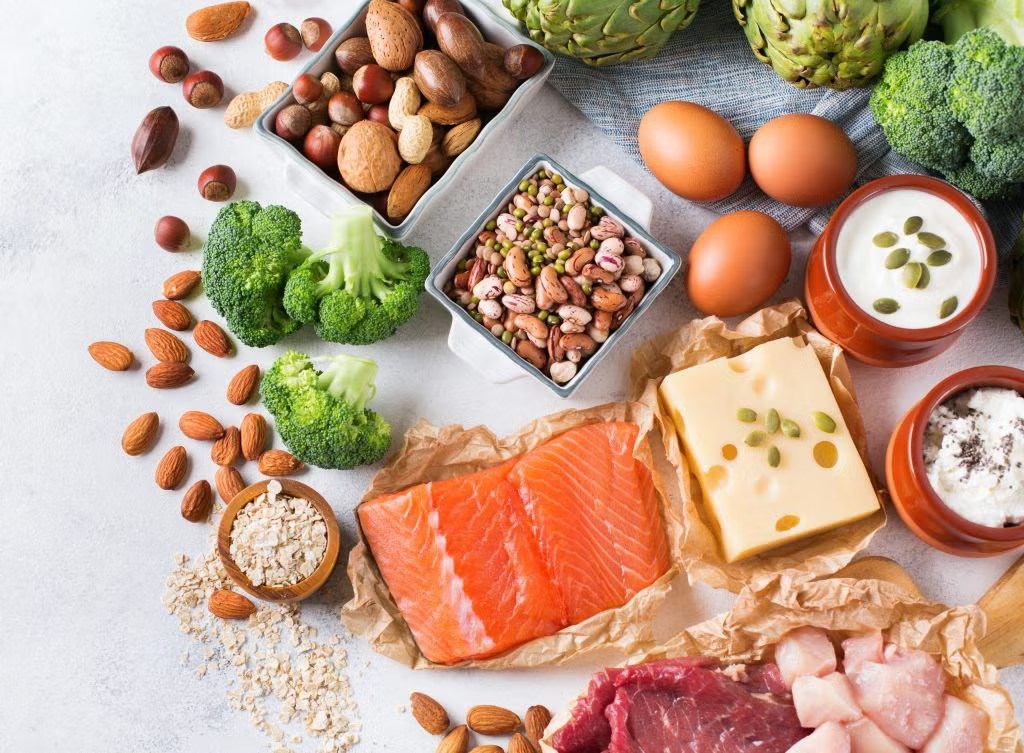
If you’re working to improve your body composition by increasing muscle mass and reducing body fat, getting enough protein in your diet is essential. But how much is enough? A popular guideline is the “1 gram of protein per pound of body weight” (1g/lb) rule, but this is not a hard and fast scientific requirement. The International Society of Sports Nutrition (ISSN) suggests that individuals aiming to build muscle or training heavily can benefit from a range of roughly 0.64-0.91g/lb with most people’s intake benefits plateauing around 0.82g/lb of body weight. However, consuming higher levels of protein has not been shown to cause harm and spreading your protein intake across 3-4 meals is more important for muscle synthesis than total daily consumption alone. Protein can also boost weight loss because it burns more calories to digest and keeps you fuller for longer compared to fats and carbohydrates.
Key Roles of Protein in Body Composition:
- Muscle Synthesis: Dietary protein stimulates muscle protein synthesis (MPS), with leucine acting as a key amino acid trigger for growth.
- Weight Management: Protein has a higher thermic effect (burns more calories to digest) and induces greater satiety compared to fats and carbohydrates.
- Sarcopenia Prevention: Higher intake is critical for older adults to prevent age-related muscle loss and reduce risk of obesity.
- Structural Integrity: It supports bone health and collagen synthesis, which are essential for overall body structure.
So how can you get 30-40 grams of protein in each meal? Here are some examples of high-protein food sources and strategies for boosting your intake:
High-Protein Food Sources:
- Animal-Based: Chicken breast (~25g per 3 oz), lean meats, fish, seafood, eggs, and dairy products like Greek yogurt (~15-18g per 3/4 cup) and cottage cheese.
- Plant-Based: Lentils, beans, chickpeas, tofu, tempeh, edamame, nuts, seeds, and high-protein grains like quinoa.
- Supplements/Fortifiers: Protein powders, collagen powder, and powdered peanut butter.
Strategies to Boost Intake:
- Start with Protein: Eat your protein source first during a meal to ensure it’s finished before you feel full.
- Don’t Skip Breakfast: Start the day with eggs, Greek yogurt, or a protein smoothie to build a foundation for daily goals.
- Smart Swaps: Use Greek yogurt instead of sour cream, choose whole-grain pasta over white, and swap mayonnaise for cottage cheese in salads.
- Protein-Rich Snacks: Keep hard-boiled eggs, cheese, nuts, seeds, edamame, or protein bars on hand.
- Boost Everyday Foods: Add hemp seeds, nutritional yeast, or chia seeds to salads, soups, and smoothies.
- Dairy Upgrades: Switch to high-protein milk and ensure you are eating 0-2% fat yogurt to maximize protein.
 Peak Performance Pilates
Leave a comment